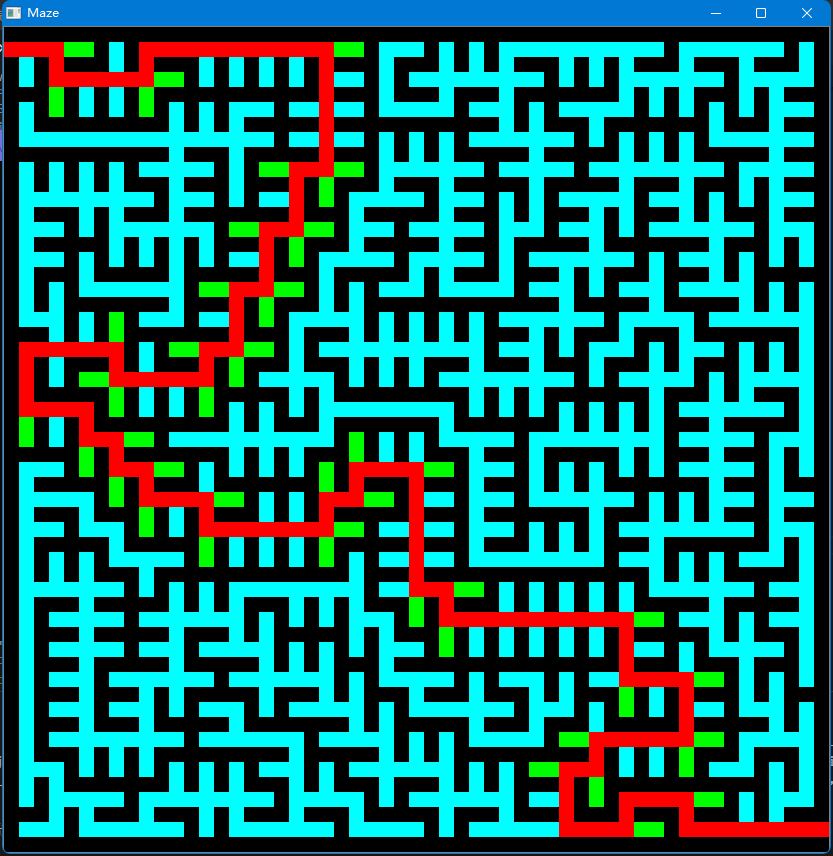
VSCode文件配置
c_cpp_properties.json
{
    "configurations": [
        {
            "name": "Win32",
            "compilerPath": "D:/mingw64/bin/g++.exe", //这里改成自己的路径
            "includePath": [
                "${workspaceFolder}/**",
                // 这里添加自己的OpenCV路径
                "D:/mingw64/include",
                "D:/OpenCV/opencv_build_cmake/install/include",
                "D:/OpenCV/opencv_build_cmake/install/include/opencv2"

            ],
            "defines": [
                "_DEBUG",
                "UNICODE",
                "_UNICODE"
            ],
            "cStandard": "c11",
            "cppStandard": "c++17",
            "intelliSenseMode": "clang-x64"
        }
    ],
    "version": 4
}
launch.json
// https://code.visualstudio.com/docs/cpp/launch-json-reference
{
    "version": "0.2.0",
    "configurations": [

    {
        "name": "(gdb) Launch", // 配置名称,将会在启动配置的下拉菜单中显示
        "type": "cppdbg", // 配置类型,cppdbg对应cpptools提供的调试功能;可以认为此处只能是cppdbg
        "request": "launch", // 请求配置类型,可以为launch(启动)或attach(附加)
        "program": "${fileDirname}/${fileBasenameNoExtension}.exe", // 将要进行调试的程序的路径
        "args": [], // 程序调试时传递给程序的命令行参数,一般设为空即可
        "stopAtEntry": false, // 设为true时程序将暂停在程序入口处,相当于在main上打断点
        "cwd": "${workspaceFolder}", // 调试程序时的工作目录,此为工作区文件夹;改成${fileDirname}可变为文件所在目录
        "environment": [], // 环境变量
        "externalConsole": true, // 使用单独的cmd窗口,与其它IDE一致;为false时使用内置终端
        "internalConsoleOptions": "neverOpen", // 如果不设为neverOpen,调试时会跳到“调试控制台”选项卡,你应该不需要对gdb手动输命令吧?
        "MIMode": "gdb", // 指定连接的调试器,可以为gdb或lldb。
        "miDebuggerPath": "D:/mingw64/bin/gdb.exe", // 调试器路径,Windows下后缀不能省略,Linux下则不要
        "setupCommands": [
            { // 模板自带,好像可以更好地显示STL容器的内容,具体作用自行Google
                "description": "Enable pretty-printing for gdb",
                "text": "-enable-pretty-printing",
                "ignoreFailures": false
            }
        ],
        "preLaunchTask": "Compile" // 调试会话开始前执行的任务,一般为编译程序。与tasks.json的label相对应
    }]
}
tasks.json
// https://code.visualstudio.com/docs/editor/tasks
{
    "version": "2.0.0",
    "tasks": [
        {
        "label": "Compile", // 任务名称,与launch.json的preLaunchTask相对应
        "command": "D:/mingw64/bin/g++.exe",   // 要使用的编译器,C++用g++
        "args": [
            "${file}",//当前文件名
            "-o",    // 指定输出文件名,不加该参数则默认输出a.exe,Linux下默认a.out
            "${fileDirname}/${fileBasenameNoExtension}.exe",
            "-g",    // 生成和调试有关的信息
            "-m64", // 不知为何有时会生成16位应用而无法运行,加上此条可强制生成64位的
            "-Wall", // 开启额外警告
            "-static-libgcc",     // 静态链接libgcc,一般都会加上
            "-finput-charset=UTF-8",
            "-fexec-charset=GBK", // 生成的程序使用GBK编码,不加这条会导致Win下输出中文乱码;繁体系统改成BIG5
            "-std=c++17", // 要用的语言标准,根据自己的需要修改。c++可用c++14
            // 扩展参数
            // -I 头文件目录
            // -L 库文件目录
            // -l 库文件
            // 这里换成自己的文件路径
            "-I", "D:/OpenCV/opencv_build_cmake/install/include",
            "-I", "D:/OpenCV/opencv_build_cmake/install/include/opencv2",
            "-L", "D:/OpenCV/opencv_build_cmake/install/x64/mingw/lib",
            "-l", "libopencv_calib3d420",
            "-l", "libopencv_core420",
            "-l", "libopencv_dnn420",
            "-l", "libopencv_features2d420",
            "-l", "libopencv_flann420",
            "-l", "libopencv_highgui420",
            "-l", "libopencv_imgcodecs420",
            "-l", "libopencv_imgproc420",
            "-l", "libopencv_ml420",
            "-l", "libopencv_objdetect420",
            "-l", "libopencv_photo420",
            "-l", "libopencv_stitching420",
            "-l", "libopencv_video420",
            "-l", "libopencv_videoio420",
            "-l", "opencv_core420",
            "-l", "opencv_imgproc420",
            "-l", "opencv_imgcodecs420",
            "-l", "opencv_video420",
            "-l", "opencv_ml420",
            "-l", "opencv_highgui420",
            "-l", "opencv_objdetect420",
            "-l", "opencv_flann420",
            "-l", "opencv_imgcodecs420",
            "-l", "opencv_photo420",
            "-l", "opencv_videoio420",
            // 中文编码
            // "-finput-charset=GBK"
            ], // 编译的命令,其实相当于VSC帮你在终端中输了这些东西
        "type": "process", // process是把预定义变量和转义解析后直接全部传给command;shell相当于先打开shell再输入命令,所以args还会经过shell再解析一遍
        "group": {
            "kind": "build",
            "isDefault": true // 不为true时ctrl shift B就要手动选择了
        },
        "presentation": {
            "echo": true,
            "reveal": "always", // 执行任务时是否跳转到终端面板,可以为always,silent,never。具体参见VSC的文档
            "focus": false,     // 设为true后可以使执行task时焦点聚集在终端,但对编译C/C++来说,设为true没有意义
            "panel": "shared"   // 不同的文件的编译信息共享一个终端面板
        },
        "problemMatcher":"$gcc" // 捕捉编译时终端里的报错信息到问题面板中,修改代码后需要重新编译才会再次触发
        // 本来有Lint,再开problemMatcher就有双重报错,但MinGW的Lint效果实在太差了;用Clang可以注释掉
    }],
}
迷宫算法
// Peter Pan
// 21-10-25
#include<stdio.h>
#include<stdlib.h>
#include<unistd.h>
#include<time.h>
#include<iostream>
#include<algorithm>
#include<sys/timeb.h>
#include<Windows.h>
#include<opencv.hpp>
#include<opencv2/opencv.hpp>
#include <opencv2/highgui/highgui.hpp>
#define IN_MAXSIZE 100
#define INCREASE 10
#define SElemType Single_Point
#define FALSE 0
#define TURE 1
#define a 0     //a表示路
#define b 1        //b表示墙
using std::random_shuffle;
using namespace cv;
typedef struct
{
    int x;    //行坐标
    int y;      //列坐标
    int direction = 1;     //方向
}SElemType;

typedef struct
{
    SElemType *base;
    SElemType *top;
    int stacksize;
}SqStack;

const int n = 181;
const int k = n / 2;
const int N = k * k;

// 迷宫的大小 n * n
int Init_Stack(SqStack *);
int Push(SqStack *,SElemType);
int Pop(SqStack *,SElemType *);
int* randperm(int limit);
void DFSmaze(SElemType [],int [][n],int [][k]);
void PrintMaze(int maze[][n]);
void draw(int x,int y,int flag);
bool MazePath(int maze[][n], SElemType start, SElemType end);
int Pass(SElemType pos);
bool StackEmpty(SqStack S);
void NextPos(SElemType* curpos, int direction);
void MakePrint(SElemType e, int print);
void PrintPath(SqStack *);

const int limit = 4;
const int node_size = 4;
const int sleep_time = 5;
const int wait_key = 1;
int* choices;
int maze[n][n];
struct timeb seed;
// 长度 宽度 CV通道数
Mat mat(node_size * n, node_size * n, CV_8UC3);

int main()
{
    ftime(&seed);
    srand(seed.time * 1000 + seed.millitm);
    choices = (int*)malloc(limit * sizeof(int));
    choices = randperm(limit);

    int i,j;

    int smaze[k][k];
    // 结构体数组
    SElemType r[(k)*(k)];

    // 把所有点都先初始化为墙。
    for(i=0;i<n;i++)
        for(j=0;j<n;j++)
        {
            maze[i][j] = b;
        }

    // 先使得横坐标和纵坐标都为偶数的变为路。
    for(i=1;i<n-1;i=i+2)
        for(j=1;j<n-1;j=j+2)
        {
            maze[i][j] = a;
        }

    // 定义起始点和结束点。
    maze[1][0]=a;
    maze[n-2][n-1]=a;

    // 存储结构体数组的横坐标和纵坐标。
    for(i=0;i<k*k;i++)   //结构体数组赋初值,索引从零开始
    {
        r[i].x = i/k;
        r[i].y = i%k;
    }
    // 数组中所有的初值全部置为FALSE,表示这些位置都没有被访问。
    for(i=0;i<k;i++)
        for(j=0;j<k;j++)
            smaze[i][j] = FALSE;

    // DFS首先访问的节点。
    smaze[0][0] = TURE;  // 初始节点
    DFSmaze(r,maze,smaze);
    PrintMaze(maze);     // 打印生成迷宫
    namedWindow("Maze");
    for (int i = 0; i < n; i++)
    {
        for (int j = 0; j < n; j++)
        {
            if (maze[i][j] == 1)
            {
                draw(i, j, 1);
            }
            else if(maze[i][j] == 0)
            {
                draw(i, j, 2);
            }
        }
    }
    imshow("Maze", mat);
    waitKey(1000);
    printf("Please enter 0 to continue.\n");
    SElemType start, end;
    start.x = 1; start.y = 0;
    end.x = n - 2; end.y = n - 1;
    MazePath(maze, start, end);
    system("pause");
    return 0;
}

void PrintPath(SqStack * s) {
    int count = 0;
    while (s->base < s->top)
    {
        printf("(%d, %d)-->", s->base->x, s->base->y);
        count++; s->base++;
        if (count % 8 == 0)
            printf("\n");
    }

}

void PrintMaze(int maze[][n]) {
    for(int i=0;i<n;i++)     // 打印生成迷宫
    {
        for(int j=0;j<n;j++)
        {
            printf("%d ",maze[i][j]);
        }
        printf("\n");
    }
}

int Init_Stack(SqStack *t)     //初始栈
{
    t->base = (SElemType *)malloc(IN_MAXSIZE*sizeof(SElemType));
    if(!(t->base))
        return 0;
    t->top = t->base;
    t->stacksize = IN_MAXSIZE;
    return 1;
}

int Push(SqStack *t,SElemType e)   //入栈
{
    if(t->top-t->base>=t->stacksize)
    {
        t->base = (SElemType *)realloc(t->base,(t->stacksize+INCREASE)*sizeof(SElemType));
        if(!t->base)
            return 0;
        t->top = t->base + t->stacksize;
        t->stacksize += INCREASE;
    }
    *(t->top++) = e;
    return 1;
}

int Pop(SqStack *t,SElemType *e)     //出栈
{

    if(t->top==t->base)
        return 0;
    *e = *(--t->top);
    return 1;
}

/*
循环弹栈,弹出一个,则将其二维数组中的FALSE改为TURE表示该元素已经被访问了。
然后寻找其上下左右没有被访问的元素,找到一个,则将夹在两个蓝色圈中的墙打破,使其变成路,然后找到的未访问的元素入栈。
*/
void DFSmaze(SElemType r[N],int maze[n][n],int smaze[k][k]) //深度优先算法
{
    SElemType e;             // 结构体变量e
    SqStack s;               // 栈里面的存储的为结构体
    if(Init_Stack(&s)==1)      // 初始栈
        printf("OK\n");
    else
        printf("Fail\n");
    Push(&s,r[0]);  //压栈r[0]
    printf("initializeing maze......\n");
    while(Pop(&s,&e))  //栈不空时,进行循环
    {
        choices = randperm(limit);
        for(int i=0;i<limit;i++) {
            switch(choices[i]) {
                //0,1,2,3分别对应上右下左
                case 0: {
                    // 点不能为外墙并且该结点未被访问过
                    if(e.x - 1 >= 0 && smaze[e.x-1][e.y]!=TURE) // 上
                    {
                        // 该节点的状态变成访问过。
                        smaze[e.x-1][e.y] = TURE;
                        maze[2*e.x][2*e.y+1] = a; //打墙
                        // 这里面r是一个一维结构体数组,每个结构分别存储X坐标和Y坐标。
                        Push(&s,r[(e.x-1)*k+e.y]);
                    }
                    break;
                }
                case 1: {
                    if(e.y + 1 < k  && smaze[e.x][e.y+1]!=TURE) // 右
                    {
                        smaze[e.x][e.y+1] = TURE;
                        maze[2*e.x+1][2*(e.y+1)] = a;
                        Push(&s,r[(e.x)*k+e.y+1]);
                    }
                    break;
                }
                case 2: {
                    if(e.x + 1 < k && smaze[e.x+1][e.y]!=TURE) // 下
                    {
                        smaze[e.x+1][e.y] = TURE;
                        maze[2*(e.x+1)][2*e.y+1] = a;
                        Push(&s,r[(e.x+1)*k+e.y]);
                    }
                    break;
                }
                case 3: {
                    if(e.y - 1 >= 0 && smaze[e.x][e.y-1]!=TURE) // 左
                    {
                        smaze[e.x][e.y-1] = TURE;
                        maze[2*e.x+1][2*e.y] = a;
                        Push(&s,r[(e.x)*k+e.y-1]);
                    }
                    break;
                }
            }
        }
    }
}

int* randperm(int limit)
{
    Sleep(sleep_time);
    ftime(&seed);
    srand(seed.time * 1000 + seed.millitm);
    int* numbers;
    numbers = (int*)malloc(limit * sizeof(int));
    for (int i = 0; i < limit; i++)
        numbers[i] = i;
    random_shuffle(numbers, numbers + limit);
    return numbers;
}

void draw(int x,int y,int flag)
{
    int red, green, black;
    if (flag == 1)
    {
        red = 0, green = 0, black = 0;
    }
    else if (flag == 2)
    {
        red = 0, green = 255, black = 255;
    }
    else if (flag == 3)
    {

        red = 255, green = 0, black = 0;
    }
    else if (flag == 4)
    {
        red = 0, green = 255, black = 0;
    }
    // 每个点像素为50?50
    for (int i = x * node_size; i < x * node_size + node_size; i++)
    {
        for (int j = y * node_size; j < y * node_size + node_size; j++)
        {
            mat.at<Vec3b>(i, j)[0] = black;
            mat.at<Vec3b>(i, j)[1] = green;
            mat.at<Vec3b>(i, j)[2] = red;
        }
    }
}

bool MazePath(int maze[][n], SElemType start, SElemType end)
{
    SqStack S;
    // SElemType* e;
    Init_Stack(&S);      // 初始栈
    SElemType curpos = start;
    // 初始点变为红色
    draw(start.x, start.y, 3);
    imshow("Maze", mat);
    waitKey(wait_key);
    Push(&S, start);
    int direction;
    int curstep = 1;
    int temp_direction;
    do {
        if(Pass(curpos)) {
            if(curpos.x == end.x && curpos.y == end.y) {
                PrintPath(&S);
                return true;
            }
            // 加入当前道路
            MakePrint(curpos, 2);
            NextPos(&curpos, curpos.direction);
            // 如果路不通就往反方向走
            temp_direction = (curpos.direction + 2) % 4;
            if(maze[curpos.x][curpos.y] != 0) {
                NextPos(&curpos, temp_direction);
                curpos.direction = curpos.direction % 4 + 1;
                continue;
            }
            Push(&S, curpos);
            draw(curpos.x, curpos.y, 3);
            imshow("Maze", mat);
            waitKey(wait_key);
            if(curpos.x == end.x && curpos.y == end.y) {
                PrintPath(&S);
                return true;
            }
            curstep++;
        } else {
            if(!StackEmpty(S)) {
                // 从栈中循环谈栈
                Pop(&S, &curpos);
                direction = Pass(curpos);
                if(direction) {
                    curpos.direction = direction - 1;
                }
                // 该块标识为不能通过
                MakePrint(curpos, 3);

                draw(curpos.x, curpos.y, 4);
                imshow("Maze", mat);
                waitKey(wait_key);
                while(!StackEmpty(S) && curpos.direction == 5) {
                    Pop(&S, &curpos);
                    // 该块标识为不能通过
                    MakePrint(curpos, 3);
                }
                if(curpos.direction <= 4 && Pass(curpos)) {
                    curpos.direction++;
                    Push(&S, curpos);

                    draw(curpos.x, curpos.y, 3);
                    imshow("Maze", mat);
                    waitKey(wait_key);

                    NextPos(&curpos, curpos.direction);
                    Push(&S, curpos);
                    MakePrint(curpos, 2);

                    draw(curpos.x, curpos.y, 3);
                    imshow("Maze", mat);
                    waitKey(wait_key);
                    if(curpos.x == end.x && curpos.y == end.y) {
                        PrintPath(&S);
                        return true;
                    }
                }
            }
        }
    } while(!StackEmpty(S));
    return false;
}

int Pass(SElemType pos)
{
    // 右
    if(pos.y+1 <= n-1 && maze[pos.x][pos.y+1] == 0) {
        printf("right\n");
        return 1;
    }

    // 下
    // attention
    if(pos.x+1 <= n-1 && maze[pos.x+1][pos.y] == 0) {
        printf("down\n");
        return 2;
    }

    // 左
    if(pos.y-1 >= 1 && maze[pos.x][pos.y-1] == 0) {
        printf("left\n");
        return 3;
    }

    // 上
    if(pos.x-1 >= 1 && maze[pos.x-1][pos.y] == 0) {
        printf("up\n");
        return 4;
    }

    printf("No way!\n");
    return 0;
}

bool StackEmpty(SqStack S) {
    if(S.top == S.base)
        return true;
    else
        return false;
}

// 1、2、3、4对应的搜索顺序分别为右、下、左、上
void NextPos(SElemType* curpos, int direction)
{
    switch(direction) {
        case 1: {
            curpos->y++;
            break;
        }
        case 2: {
            curpos->x++;
            break;
        }
        case 3: {
            curpos->y--;
            break;
        }
        case 4: {
            curpos->x--;
            break;
        }
    }
}

// 留下标记
void MakePrint(SElemType e, int print)
{
    maze[e.x][e.y] = print;
}
运行结果